

In the thirteen or so years that I’ve had this blog, I think this is the first non-hiking / non-mountain post that I’ve ever made. So I guess it’s about time that I diversify things a ‘bit’. Besides, since I’m really not interesting or witty enough to participate in social media, this blog serves as my curated digital presence – which is good, as I’m pretty sure that few – including my own family – actually read anything I write. Then again… maybe I’m not really online and my kids have me posting inside a digital placebo, similar to how Ryan setup Creed’s blog on the Office. 😂
Anyway, earlier this year, I was asked by the organizers of the Lethbridge High Level Innovation Conference, if I would setup a display of retro consoles and computers from my collection. Having never done anything like this, I accepted their generous offer; though not without trepidation.
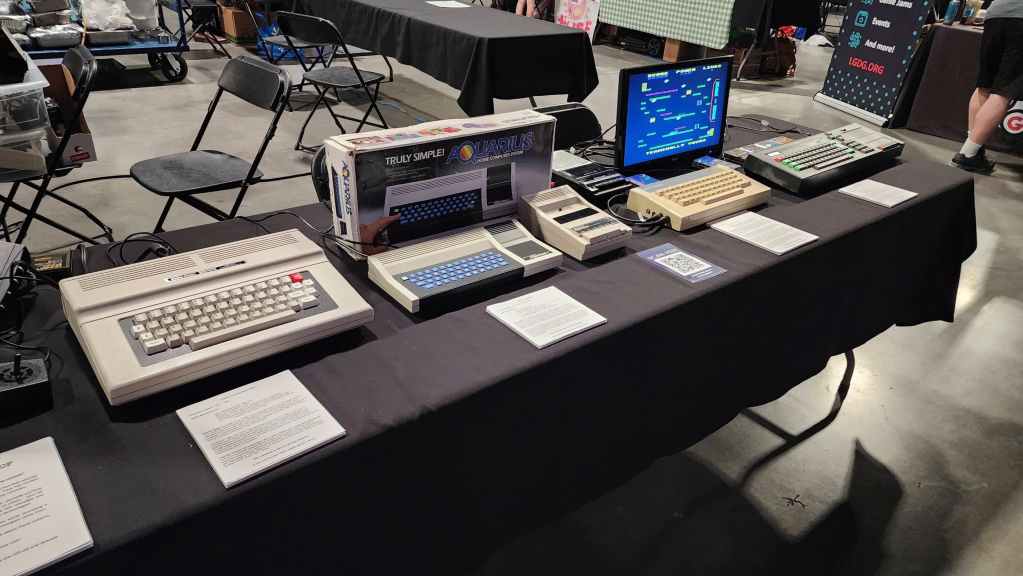
Of course, being an historian by nature and by training, all of my hobbies are intertwined into my curiosity for the past. So as I thought about what I would display and how, my underlying motivation centred on the why. For me, collecting and restoring old systems has always been about sharing them with my kids and grandkids, so they could one day see and experience what the old days of gaming and computing looked like – before selling them on eBay the day after I die. 😂
Thinking about this display, made me realize that I needed to take this same approach. As my kids are always amazed at what used to exist and how it worked, the historian in me immediately thought to create a working, hands-on museum that not only provided the historical context for each system, but also the chance for people to experience it in action. That’s how I came up with, “A Byte of History”. After all, what the point of collecting stuff if you can’t share it? 🙂
Focusing on 8-bit and 16-bit computers, I selected a dozen systems from my collection along with an assortment of peripherals such as CRT monitors, 5.25″ disk drives, cassette recorders, and single button joysticks. I then created small info cards to go with each system and organized the display into 8-bit and 16-bit sections that aligned with what I deemed, important intersections of history and technology.
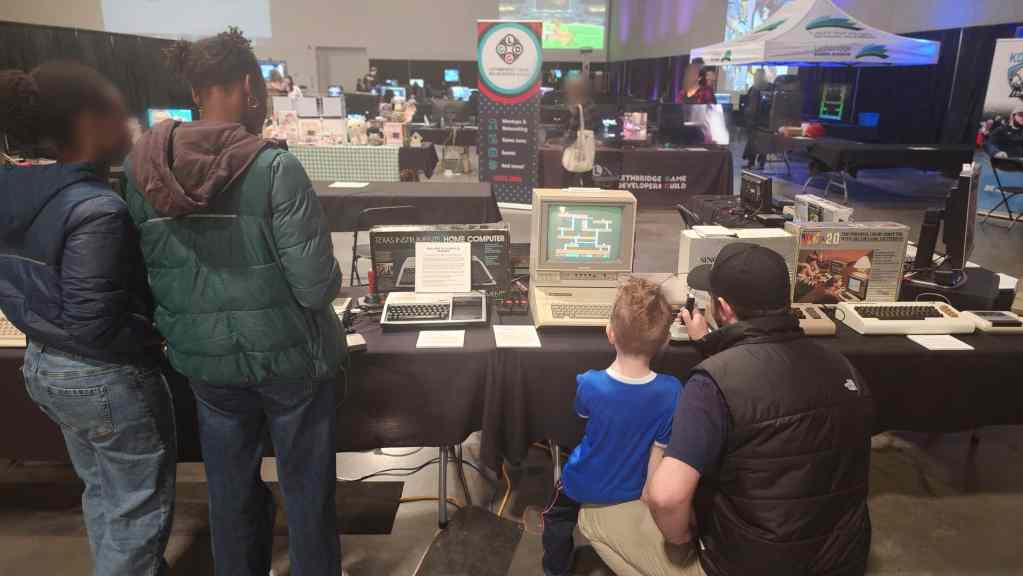
Having never done a public display, I’d forgotten how much flipping real estate these old system take up! Which leads me to what I thought was a neat outcome of the entire experience. As historians, separating nostalgia from history is always an important task, especially when it comes to discussing popular culture. In a highly simplistic explanation, nostalgia is how our brains subjectively curate our memories of an event or experience into comforting snapshots or good feelings. History on the other hand, is concerned with situating and describing an event within an evidence-based context – the reality of which, might be vastly different than how our nostalgic brain recounts it.
For example, I remember one of my favourite games on my Commodore 64 was Pengo. I got this game shortly after receiving my C64 for Christmas in 1983. My dad had just passed away and the C64 was what he wanted me to have as a Christmas present. At that point, I didn’t own a 1541 Disk Drive, so the only way I could play the game, was loading it on a cassette tape through the 1530 Datasette. Well, that took 10 – 15 minutes of waiting just to get the game to load, followed by several more minutes of waiting in game for a new level to queue. However, compared to my Atari 2600, the upgrade in graphics and sound was significant.

My nostalgic brain remembers the good feelings and experiences of playing the game in a time of grief; while the reality of history fills in the blanks of how frustrating it actually was to wait and wait and wait for the stupid cassette to load. It also tells me that I was pretty privileged to have my own computer in 1983. That’s why these old systems are helpful on a microlevel for illustrating some of the differences.
In short, nostalgia is a powerful and evocative influence when it comes to what we buy, what we watch, who we vote for, and so on. It’s what sells and can make us or others, a bunch of money. Meanwhile, history provides the evidence that all might not have been as golden as we thought. It includes those voices or narratives that we may have left out or perhaps overlooked. When overlayed onto nostalgia, good history often makes us uncomfortable.
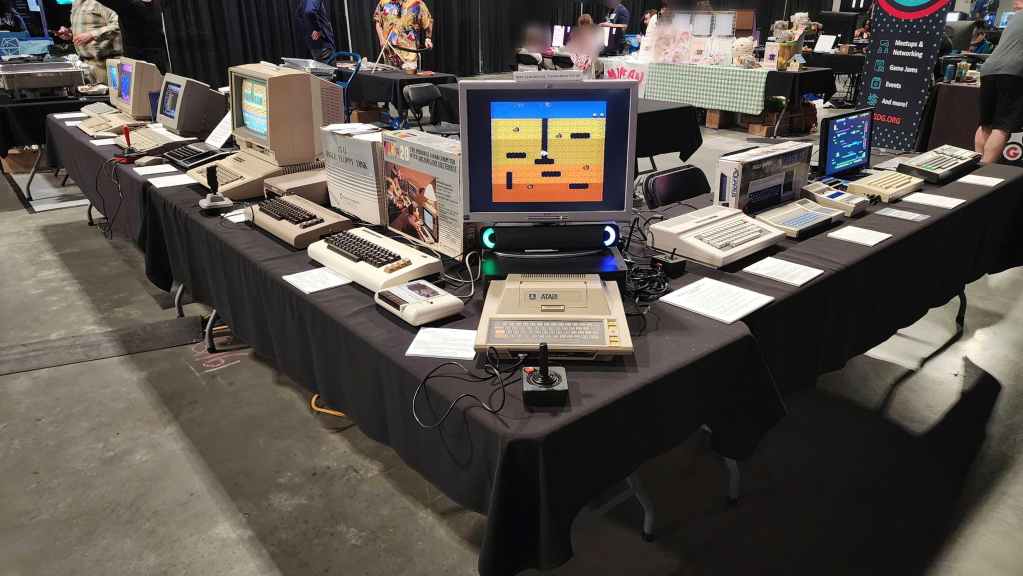
Anyway, back to the booth… I was genuinely surprised at how busy it was. With a neat intergenerational demographic, it was really fun to not only demonstrate how a game loaded from cassette or a 5.25″ disk, but also to watch people try these systems either for the first time or the first time in 40-years. I had a ton of fun answering questions but also asking questions.

Many were excited to once again see and play on their first computer. One gentleman asked if I had a TI99/4A and when I showed it to him, he remarked that not only was it was his first computer, it was what launched him into a lifelong career in technology. When I asked if he wanted to try it, he immediately asked, “Do you have TI Invaders?” As luck would have it, I did, and he spent an extended amount of time playing it with a huge smile on his face. 🙂

An esports competitor came by and tried Donkey Kong on the Atari 400. He’d never tried a one button joystick before nor had he ever played DK. After playing for quite a while, he remarked, “This is such an amazing game!” and then he went and got his friends to come and try. The group then spent a good 30 minutes at the booth trying a bunch of the old computers while asking some great questions. This was super cool.

The cassette game, The Hacker, was a hit on the Acorn Electron, especially for some of our local game developers. For many, seeing a game load on cassette was new knowledge – as was loading H.E.R.O. on a Commodore 1541 disk drive. Of course, through all these conversations, I was more than keen to talk history. 🙂 All in all, it was a great experience (at least for me) and I hope that it was both educational and fun for those who came by the booth.
Thanks again to, Eyren Uggenti, from the High Level Conference for inviting me to participate and thank you to everyone who came by to chat. 🙂



Leave a Reply